Four Years at the Wilkes Honors College, Start to Finish
June 15, 2026 | Personal Experience
People usually ask me about the ending first, the Magna Cum Laude part, the speech, the award. I understand why, and I have written about graduation day on its own (graduating Magna Cum Laude) so I will not relive the whole ceremony here. This post is about everything that came before it. Four years is a long time, and a lot happened to me inside that stretch that nobody can see from a stage on a Saturday morning in May. I want to walk through it in order, from the email that started it all to the day I rolled across the finish line, because the story only makes sense if you take it in the sequence I lived it.
March 2022: The Email
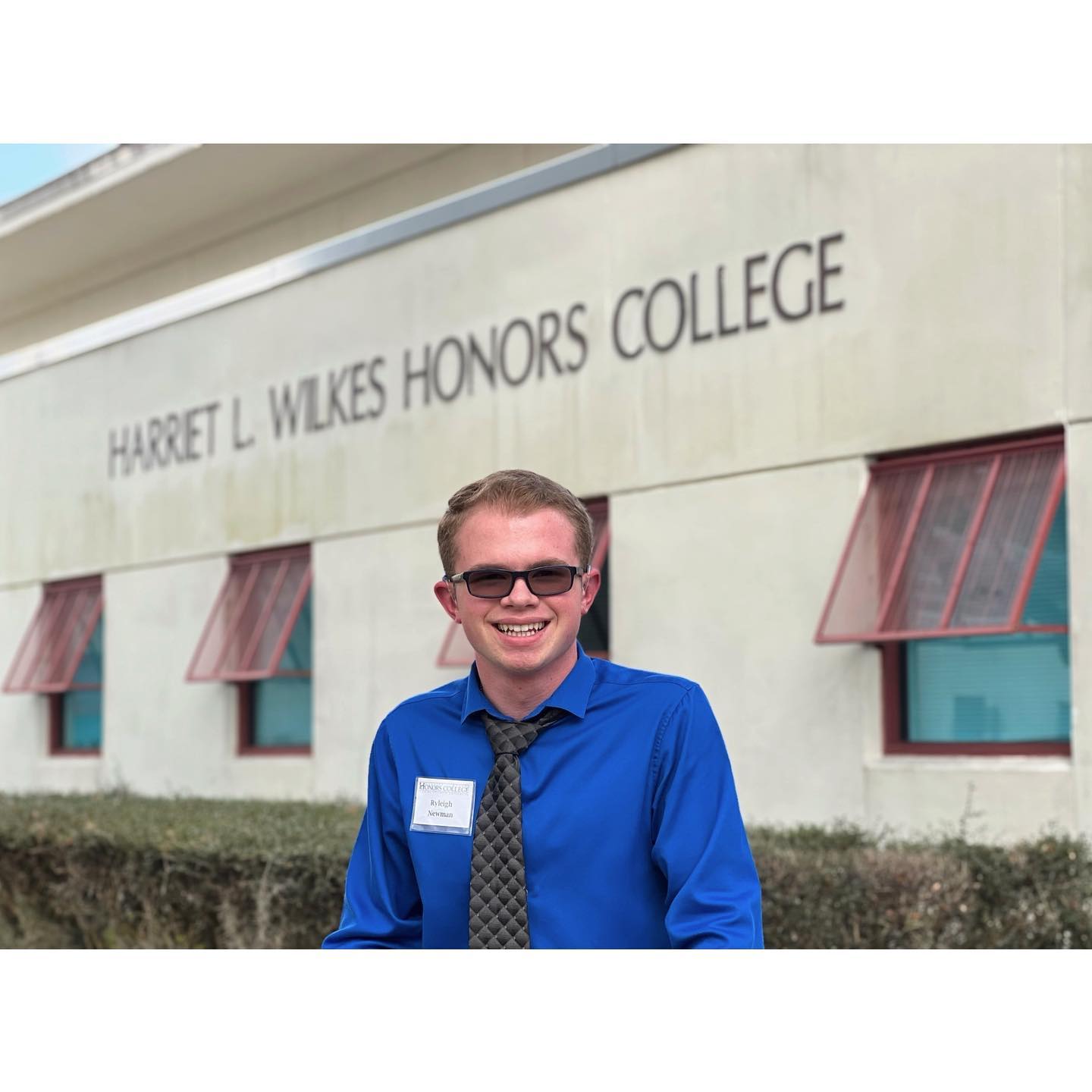
I got into the Harriet L. Wilkes Honors College of FAU in March of 2022, and I remember exactly how small and strange the moment felt. The Wilkes Honors College is the public honors college of Florida, a small liberal arts campus down in Jupiter with its own faculty, its own students, and its own slightly stubborn personality, and getting in meant I would be one of a couple hundred people on a campus where professors actually learn your name. I chose to come in as a Bachelor of Science student in Biological and Physical Sciences, and because I have never been able to leave well enough alone, I doubled my concentration into Biological Chemistry and Data Science and Analytics. On paper that is a mouthful. In practice it meant I wanted to understand living things at the level of molecules and also at the level of the numbers those molecules generate, and I was not willing to pick just one.
August 2022: Orientation, With Mom
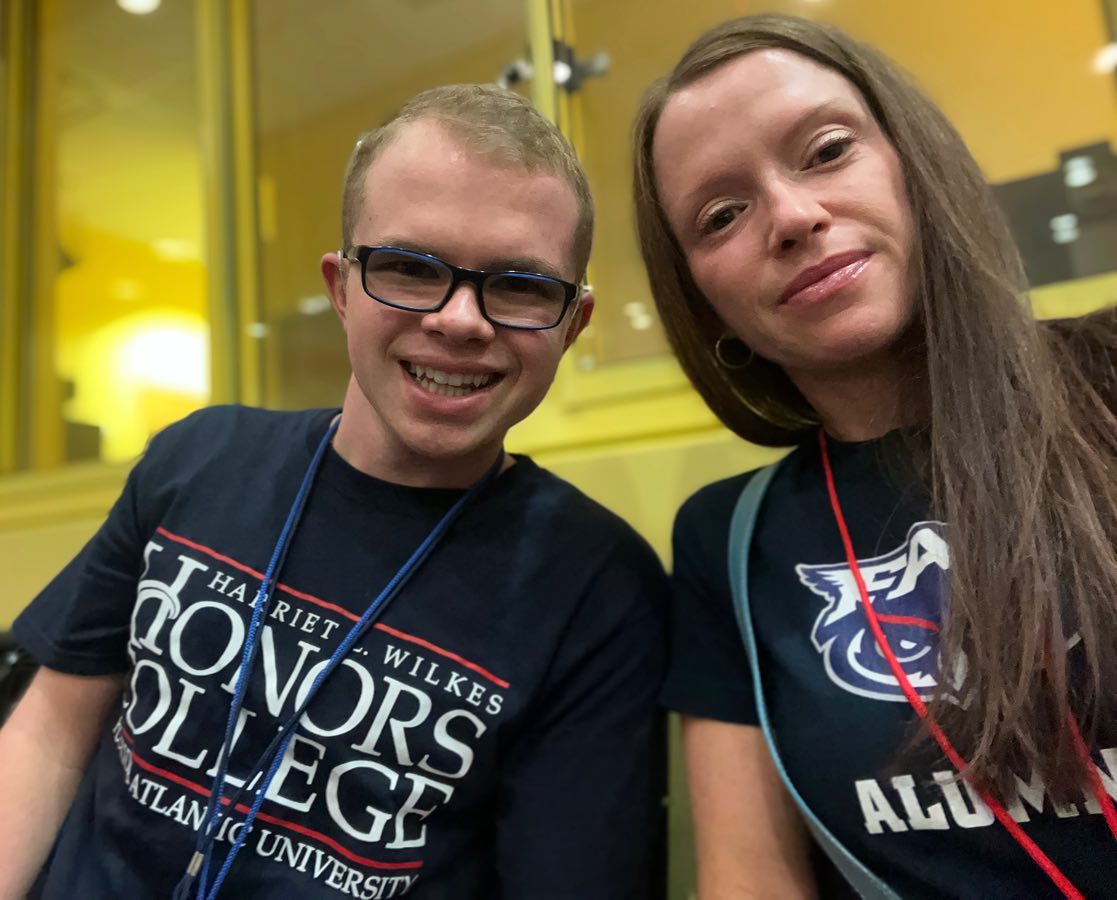
I arrived in August of 2022, and my mom came with me for orientation. She is an FAU alum herself, which she will mention if given any opening at all, so the two of us standing in the building in our matching shirts, hers reading alumni and mine reading Honors College, was a little on the nose and completely perfect. Orientation is mostly logistics, lanyards and schedules and where the dining hall is, but underneath the logistics there is this quiet electric feeling that the next chapter is starting whether you are ready or not. I was not entirely ready. I do not think anyone is. But I had my mom there for the first day of it, and that mattered more than I would have admitted at eighteen.
First Day in the Dorm
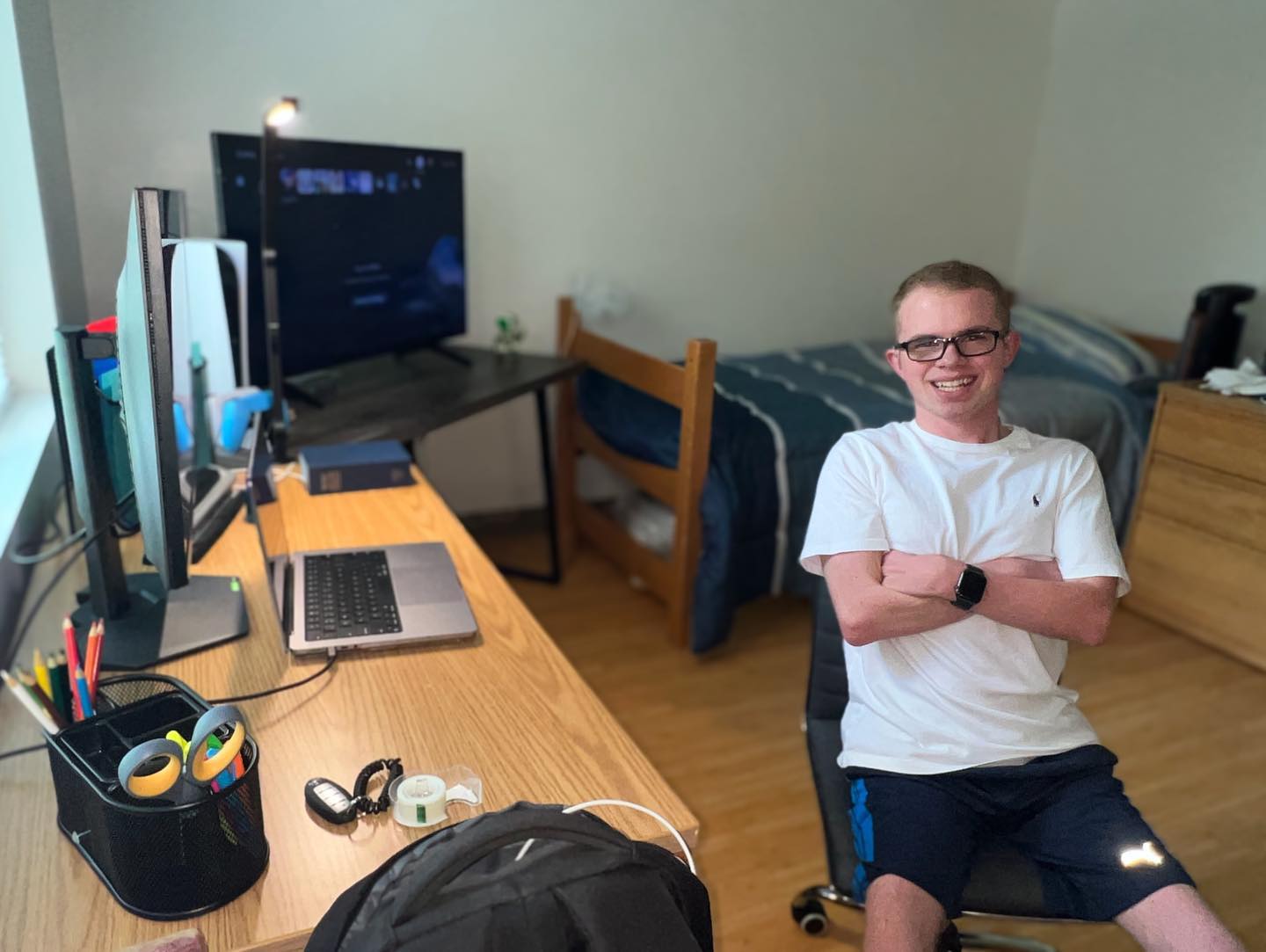
The first day in the dorm is the one everybody pictures when they think about going to college. Mine looked like a desk pushed against the wall, two monitors I absolutely did not need but absolutely wanted, a laptop, a fresh stack of pencils, and a bed I had no idea how to make. I sat down in that chair with my arms crossed and a grin on my face and felt like I had pulled something off. I could walk then. I want to say that plainly, because so much of what comes next is about the body changing, and I do not want the early version of me to disappear into the later one. That kid at the desk thought the hard part was the homework.
Year One: Losing the Ground Under Me
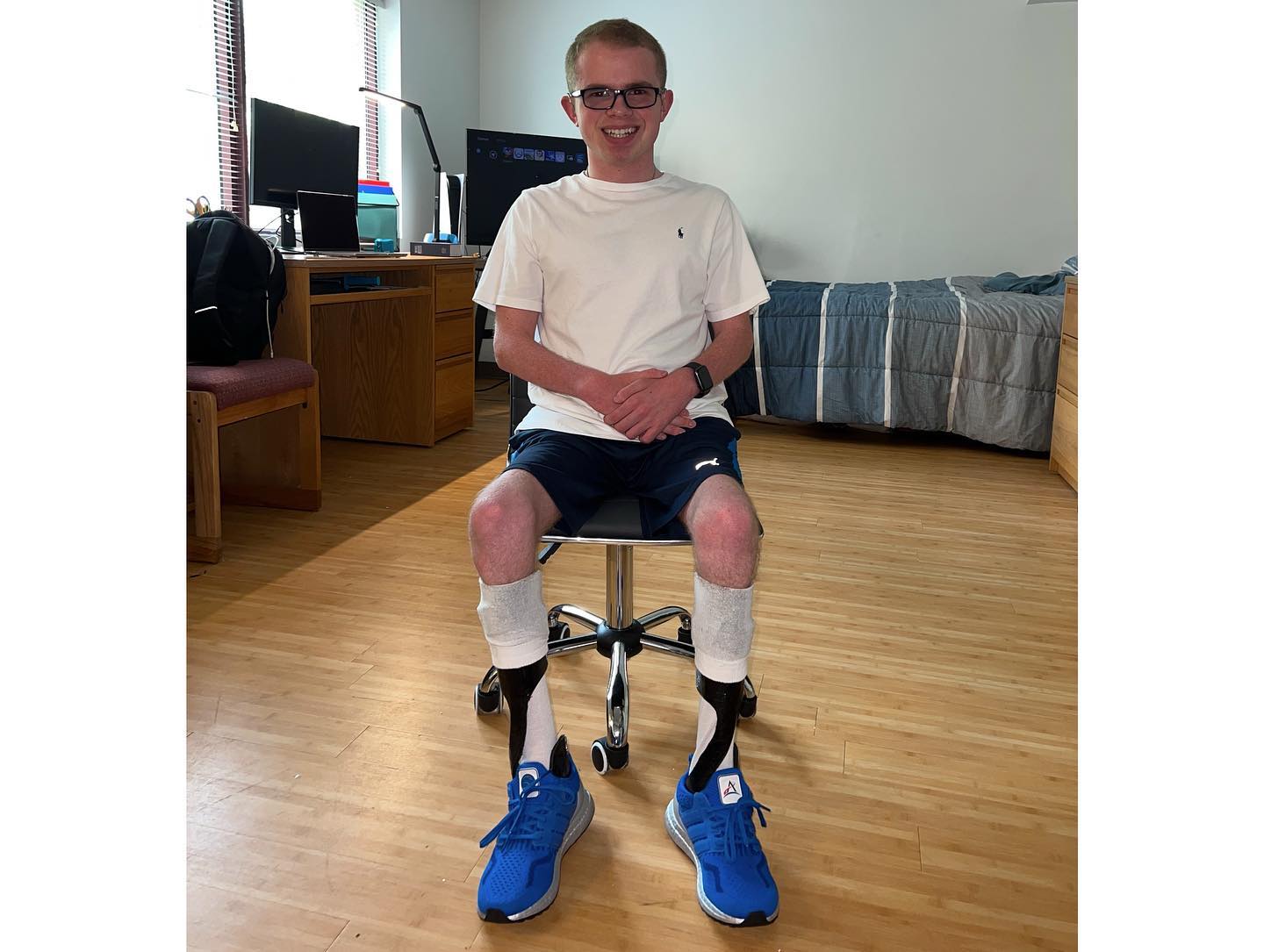
Somewhere in that first year my legs started to go. It did not happen all at once, which is almost worse, because you keep telling yourself it is nothing, it is a bad week, it is the new mattress, until one day you are pricing out leg braces. I went from walking to walking carefully, then to braces on both legs to keep my ankles where they were supposed to be, then to a walker, and eventually I lost the ability to walk at all and became a full-time wheelchair user. I was a teenager living away from home for the first time, taking organic chemistry, and watching my own body quietly file for early retirement without telling me why. No diagnosis, no explanation, just a slow subtraction. The strangest part was how ordinary the days still felt, how I would lose a little more mobility and then go take a quiz like nothing had happened, because the world does not pause your degree while your nervous system files paperwork.
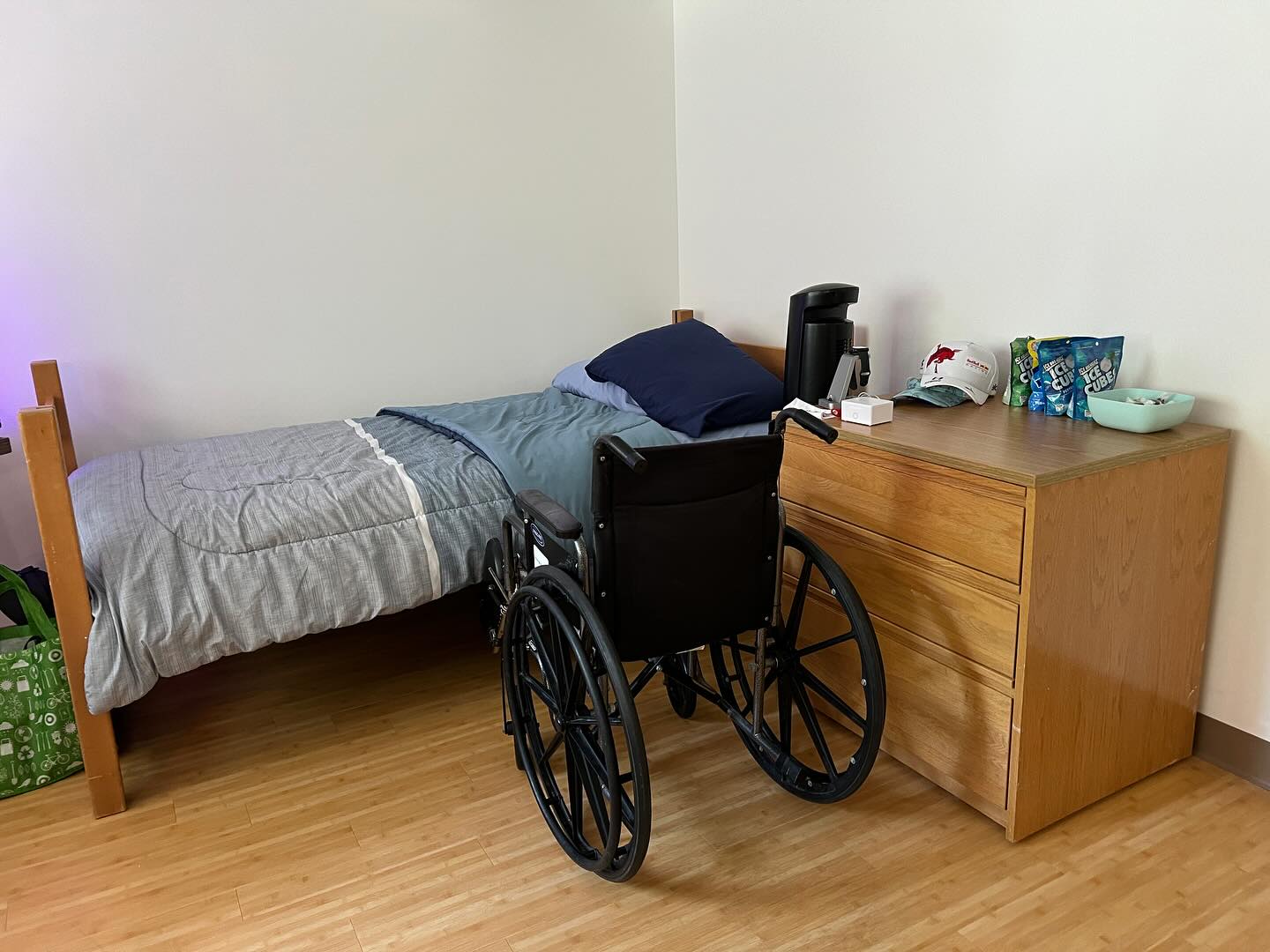
The Honors College made this survivable in a way I did not appreciate until later. On a campus that small, the people who run accommodations are not a help-desk ticket, they are humans you pass in the hallway, and they moved me into an accessible room without making me feel like a problem to be solved. By my second year I was moving into a space built for the chair from the start, with a wheelchair parked beside the bed where a backpack used to go. There is a photo of that room that still stops me, the chair just sitting there next to the dorm bed, completely matter of fact, like it had always belonged.
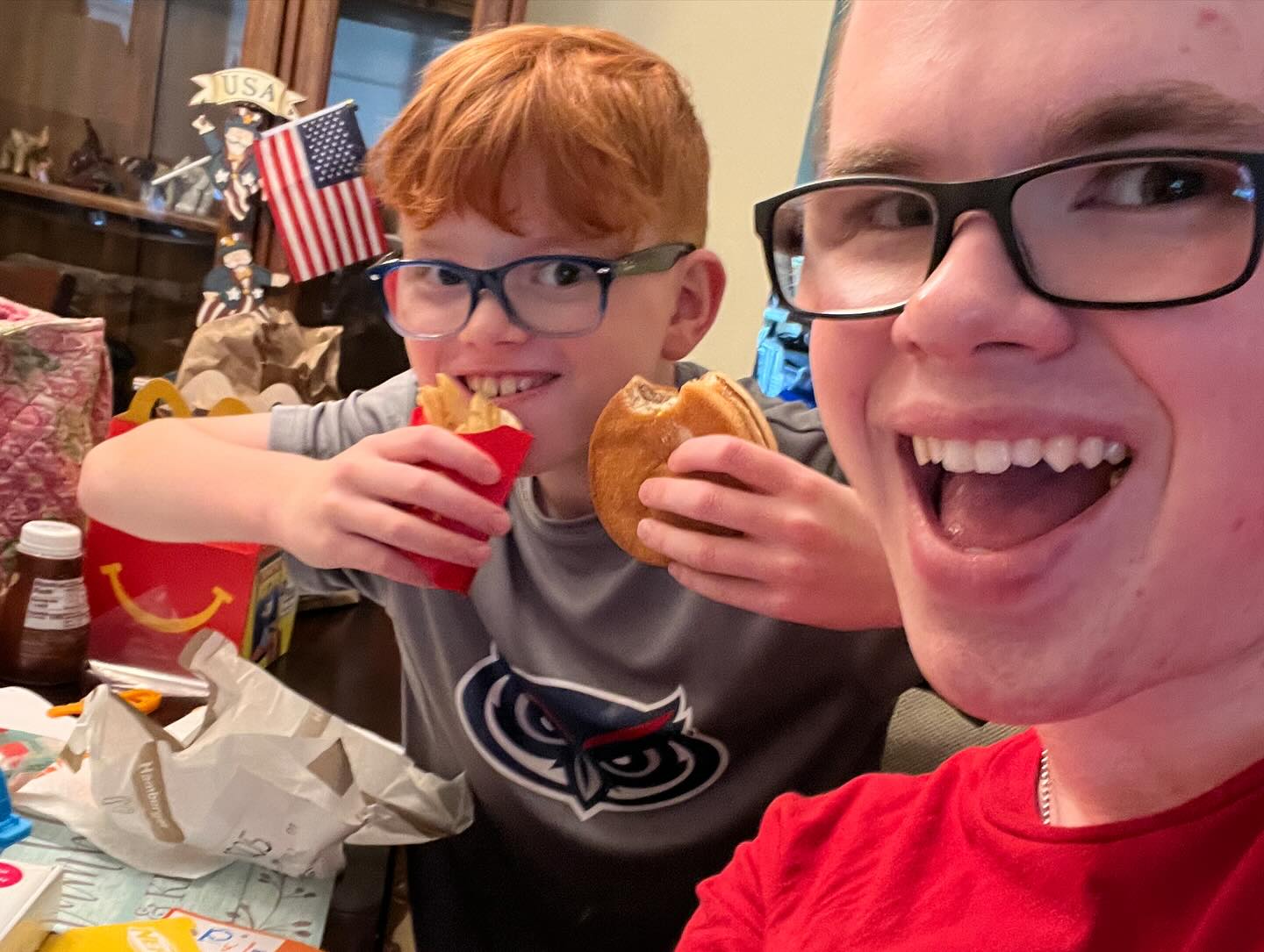
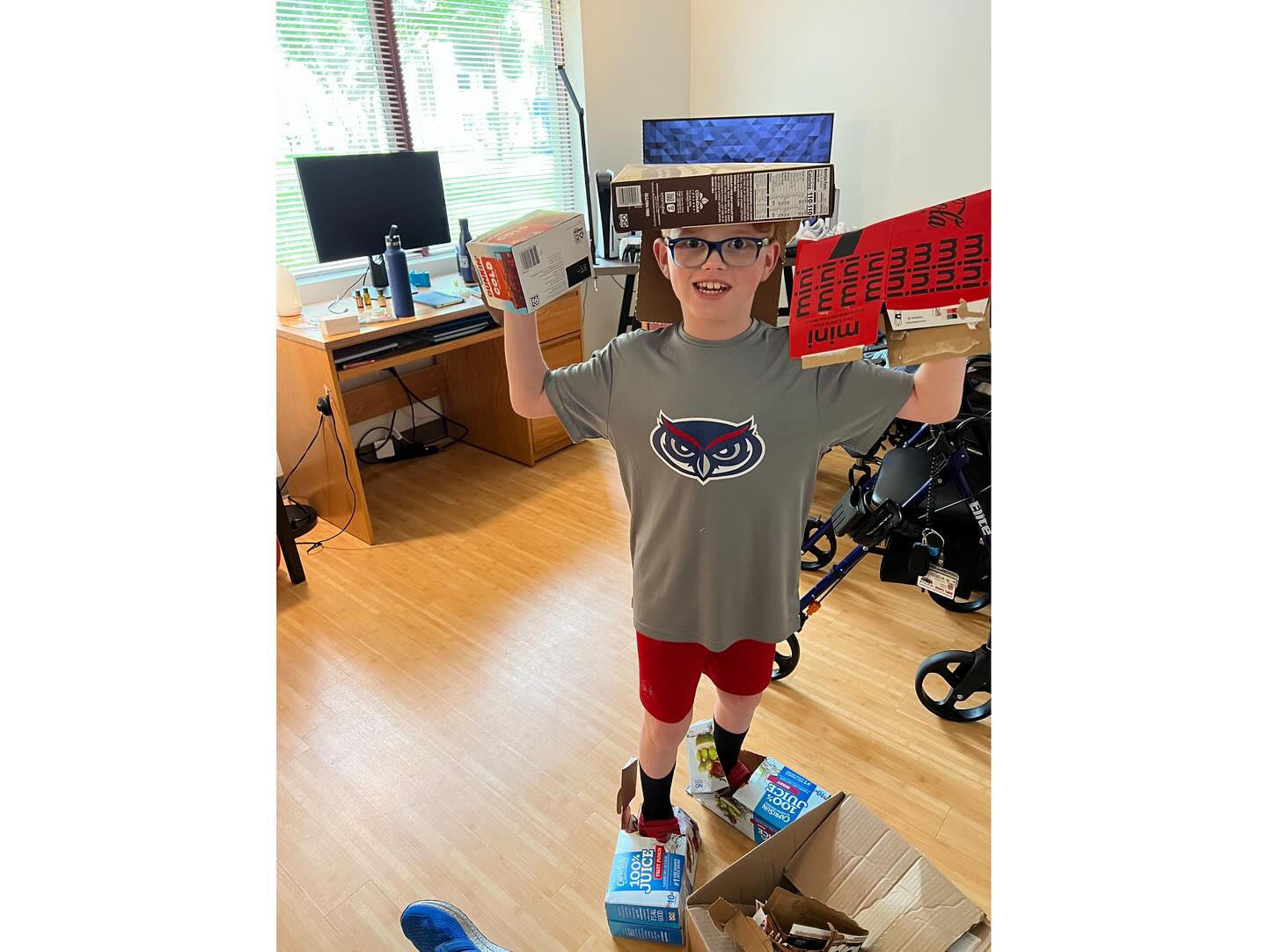
Move-in for that accessible room turned into a whole family operation. My little brother Emerson came along and treated the empty cardboard boxes as the single greatest part of the day, which is exactly the right energy to have around when you are quietly processing a wheelchair. We sat on the floor and unpacked groceries together, and he kept me laughing through what could have been a heavy afternoon.
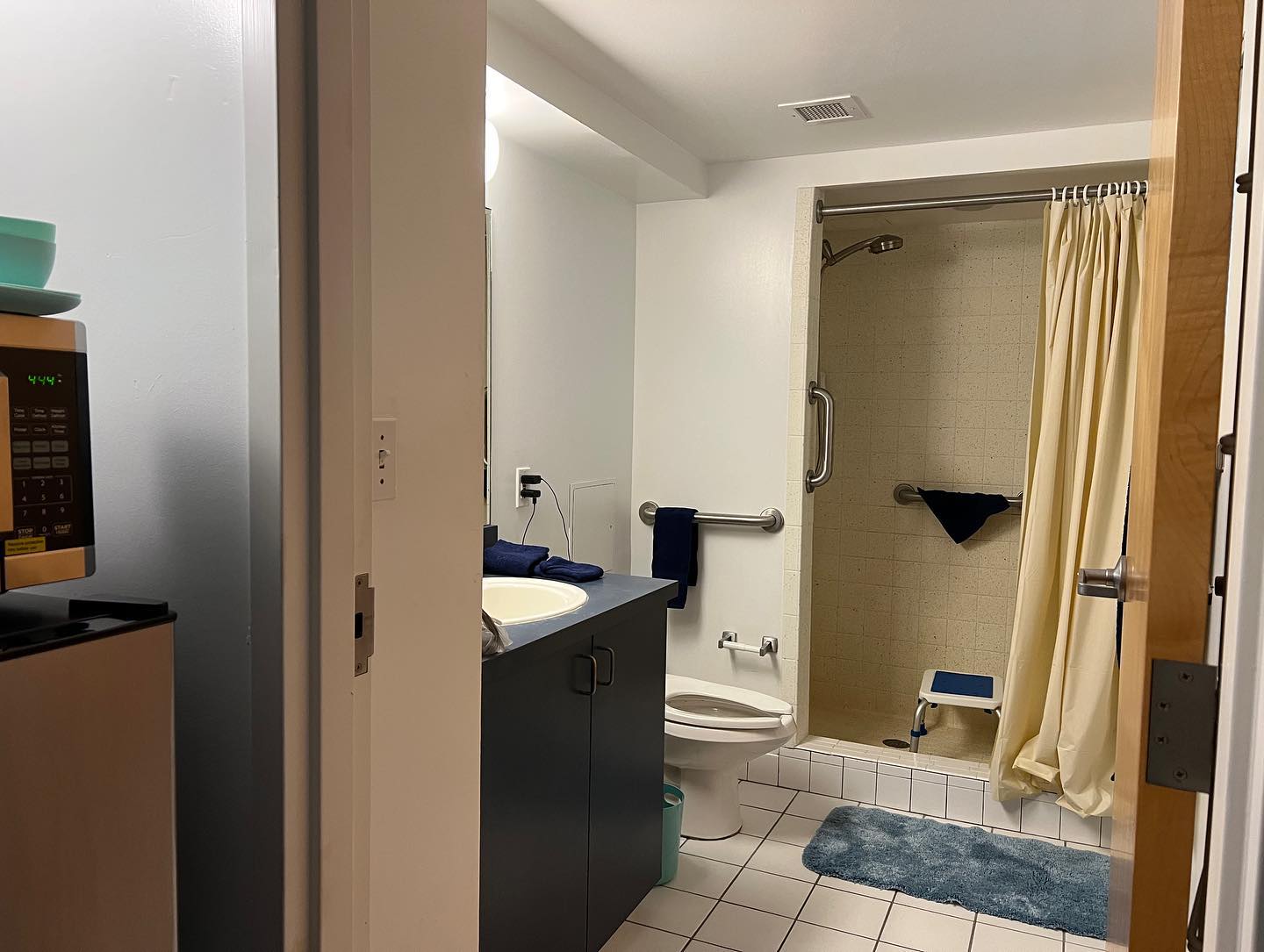
The accessible bathroom deserves its own mention, because grab bars and a roll-in shower seat are the kind of thing you never think about until the day you need them, and then they become the difference between independence and asking for help every morning. Small details, enormous consequences.
Research at the UF Scripps Institute
The classroom was never going to be enough for me, so I went looking for a lab, and I ended up doing RNA research at the UF Scripps Institute for Biomedical Innovation and Technology, which sits right up the road from the Honors College in Jupiter. I worked in the Disney Lab, which studies how small molecules can be designed to target RNA, an area of chemistry that was considered close to impossible not that long ago. RNA is the messenger that carries the instructions written in your DNA out to the rest of the cell, and learning to grab onto it with a drug-like molecule opens the door to treating diseases that were previously untouchable. Sitting at a bench, running reactions, and watching a molecule I helped make actually do something was the first time the words on my degree felt like a real job instead of a course catalog.
There was a personal undertone to all of it that I could not ignore. I was studying the molecular machinery of the body in a lab during the day, then going home to a body that was breaking down in ways nobody could explain, and the overlap was impossible to miss. That tension turned out to be the seed of my thesis, though I did not know it yet.
National Model UN
Science was not the only thing the Honors College pulled out of me. I competed in National Model United Nations, which if you have never seen it is a strange and wonderful blood sport for people who like rules of procedure. You get assigned a country, you study its actual positions, and then you sit in a simulated UN committee and try to negotiate real resolutions while staying in character as your delegation. For someone who came in as a biochemistry and data student, learning to argue policy, draft language other delegates would actually sign, and think on my feet in a packed room was a completely different muscle. It taught me that being right is only half the work, and that the other half is getting a room full of people who disagree with you to come along anyway. I use that lesson more than almost anything I learned in a lab.
A Few Frames From the Dorm Years
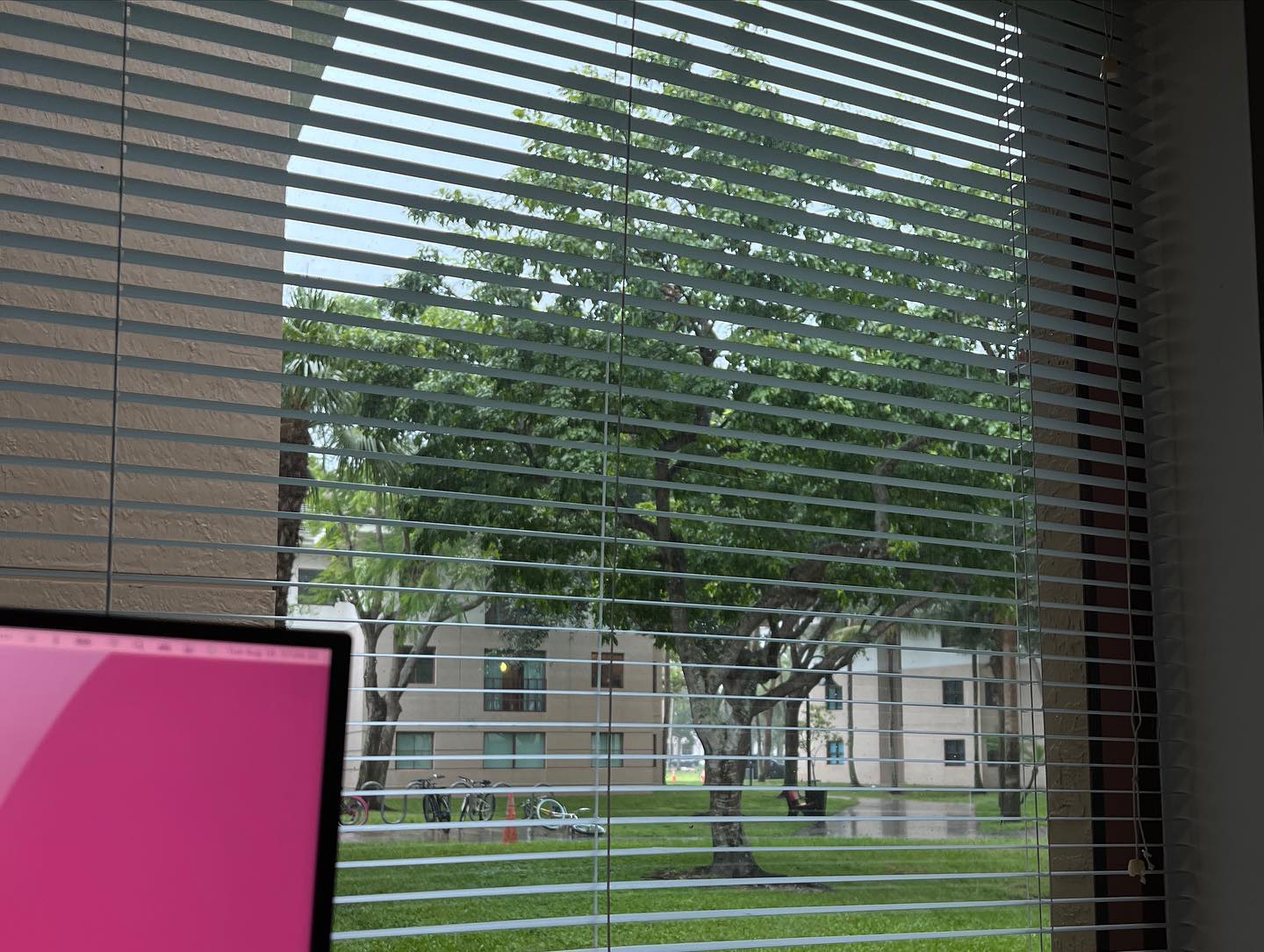
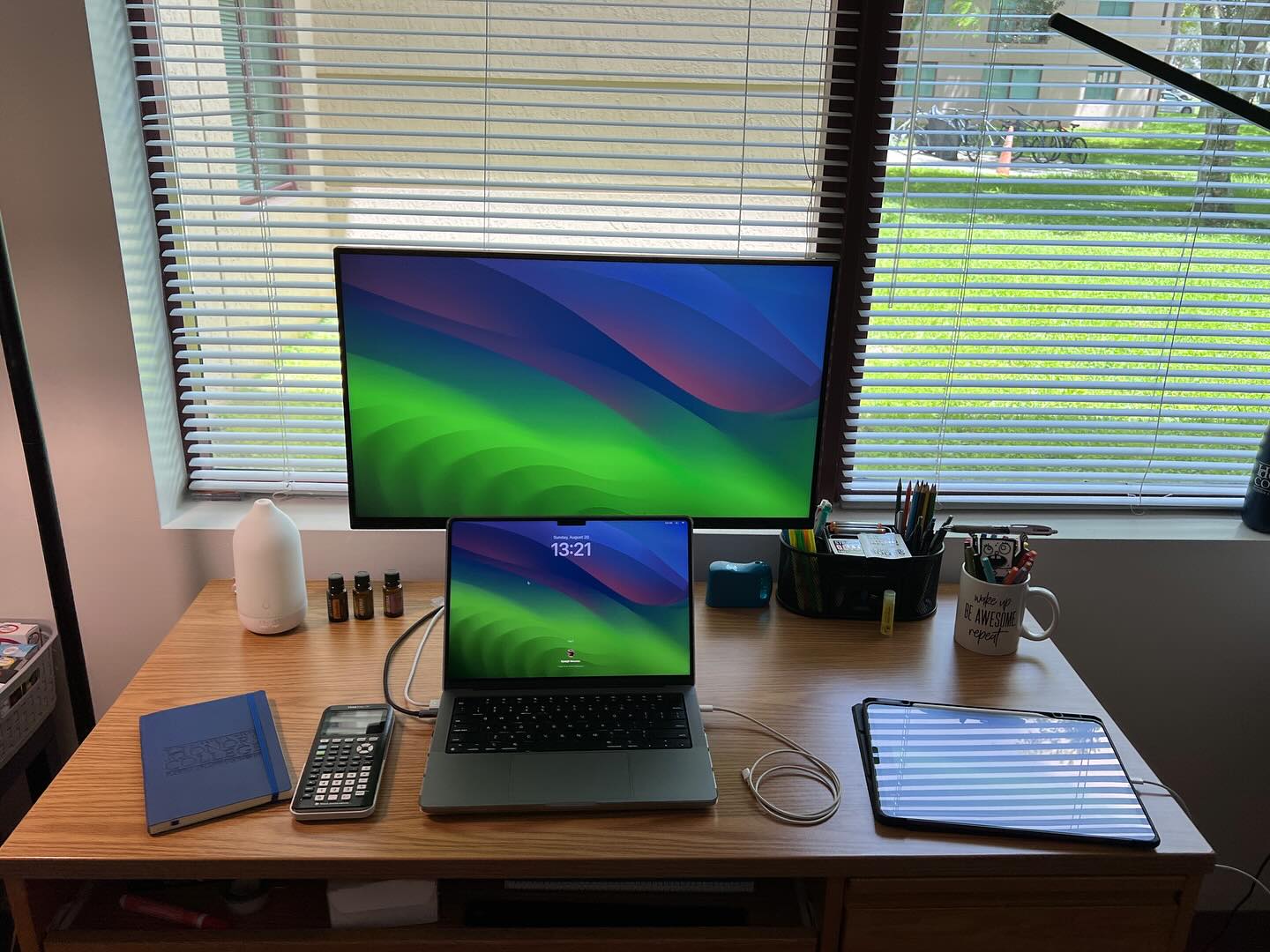
Not every part of college fits into a tidy milestone. A lot of it was just life, the window onto the green campus while I worked, the desk where I lived, my brother turning a delivery into entertainment, and the small dumb joys that hold a hard stretch together. Here are a handful of those frames from the years in the dorm, the ordinary backdrop to everything else.
Studying Abroad in France
For a long time I was quietly certain study abroad was something that happened to other people, the able-bodied ones who do not have to call ahead about elevators. The Honors College proved me wrong. I spent a few weeks studying abroad in Lyon, France, through the diplomacy program, rolling down centuries-old cobblestone hills that were never designed with wheels like mine in mind, and turning 21 in the middle of it. It was the single best disproof of my own low expectations that I have ever lived through, and I gave it a whole post of its own (studying abroad in France) because it deserved more room than a paragraph. The short version is that a wheelchair user from Florida went to a city built on hills and came home certain that the word impossible was doing far too much heavy lifting in my vocabulary.
The Thesis: Investigating My Own Disease
Every Honors College student writes a thesis, and for most people it is the capstone of their academic interests. For me it became something closer to a personal investigation. I wrote my honors thesis on my own undiagnosed neuromuscular disease, the very thing that had been quietly taking my legs since freshman year, and I turned the tools I had spent four years learning, the biochemistry, the data analysis, the molecular thinking, onto my own genome. I dug into my own DNA looking for the variant that nobody had been able to find, and I wrote about what I found and what I did not (investigating my own DNA). It was the most personal piece of science I will probably ever do, and the strangest, because the subject of the study and the author of the study were the same person.
The thesis was recognized with the Outstanding Thesis Award, which I am still a little disbelieving about. I did not write it to win anything. I wrote it because I needed answers and the standard medical system had run out of them, and turning that frustration into a real piece of research was the only way I knew to push back against four years of not knowing. That the college saw the work and honored it meant more to me than the line on the transcript.
May 2026: The Finish Line
Four years after that email in March, I graduated Magna Cum Laude, and the faculty chose me to be the commencement speaker for my class. Standing in front of everyone in cap and gown to send off the people I had spent four years beside was not something the kid at the dorm desk could have pictured, and I have written about that day and the speech itself in their own posts (graduating Magna Cum Laude and the graduation address), so I will let those carry the ending. Here I just want to sit with the arc. I walked into the Wilkes Honors College able to walk and walked out, so to speak, in a wheelchair, with a research record, an award-winning thesis about my own body, a trip to France, a Model UN gavel's worth of arguments, and a degree I had to fight harder for than I ever expected.
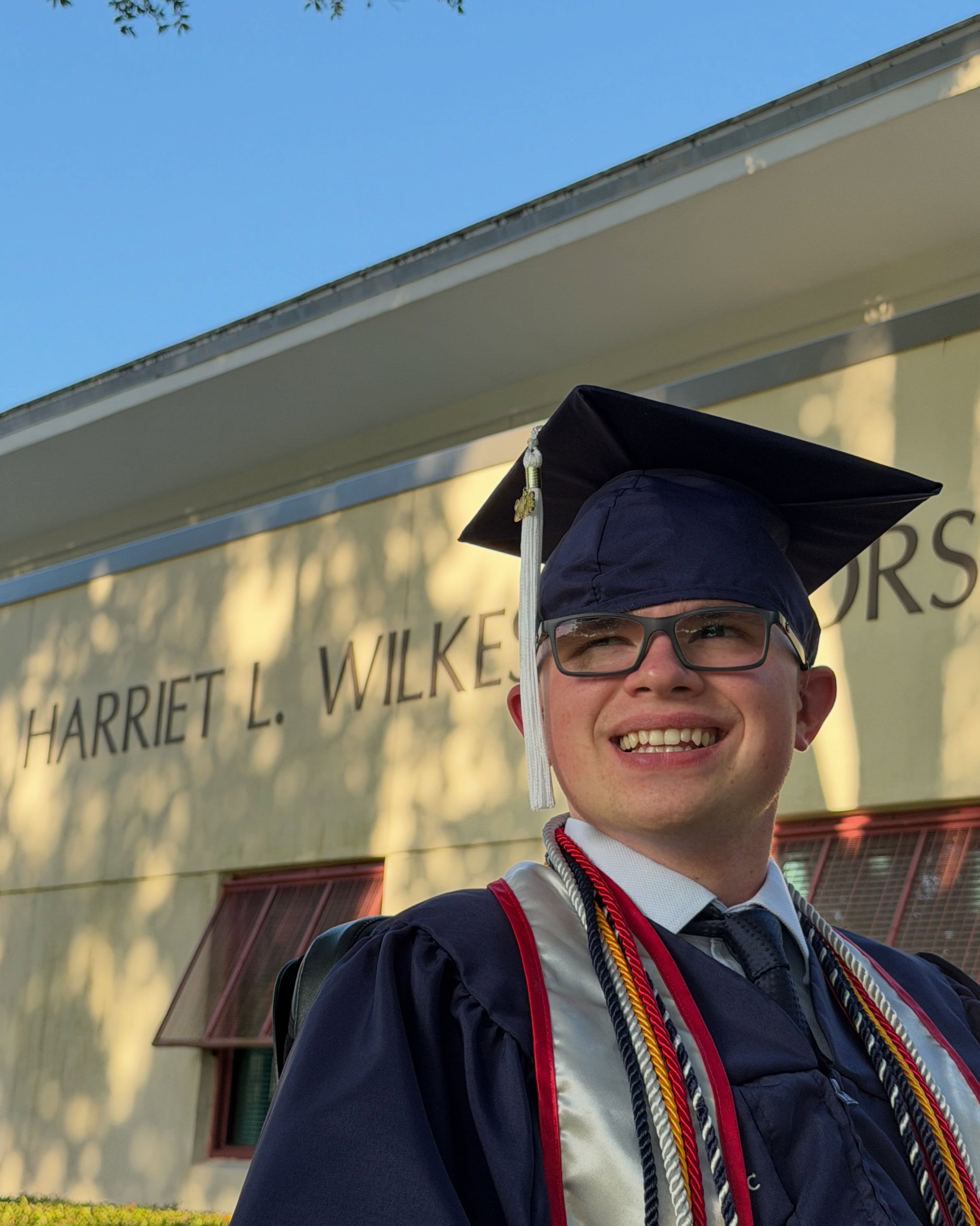
If you had shown that opening-day photo and this last one to me side by side in 2022, I would have asked a lot of questions, and most of them would have been scared ones. The truth is that the four years between them were harder than I would wish on anyone and better than I had any right to expect, often in the same week. The Wilkes Honors College did not make my disease go away, and it could not. What it did was refuse to let the disease decide what I was allowed to do, and across four years that turned out to be everything.
Written by Ryleigh Newman