Speaking on Perspective: My Honors College Graduation Address
May 8, 2026 | Personal Experience
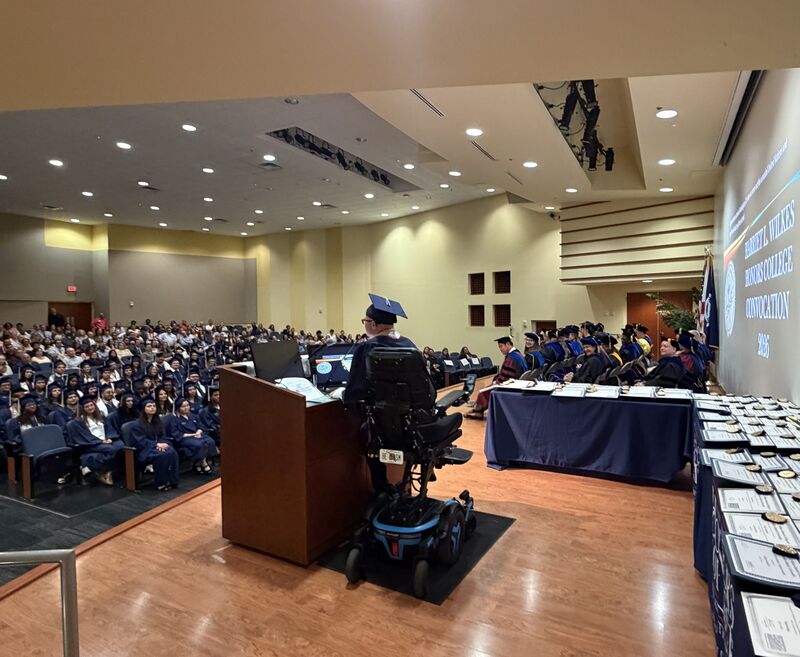
A few days ago I gave the graduation address at the Medallion Ceremony for the Harriet L. Wilkes Honors College of Florida Atlantic University. Standing at the podium in front of my whole graduating class, with my family somewhere out in the crowd, felt like the least likely ending I could have written for myself four years ago. The faculty and my peers picked me to give it, which still does not totally make sense to me, but I was grateful for the chance and I tried to use it honestly instead of safely.
If you would rather hear the whole thing than read me talk around it, the full address is right here. The post below is the longer story behind it, the part I did not have time to say in five minutes at a microphone.
Showing up with no clue
Four years ago I walked into the Honors College with no real idea what I was doing. I was a freshman who could still walk, and I had picked a small college mostly because it felt quiet and the people seemed kind, and I figured the rest would sort itself out the way it usually does. I did not have a plan, I did not have a thesis topic, and I had no sense at all of how different I would be by the time I crossed that stage. Looking back, that cluelessness was probably a gift. It meant I carried no fixed picture of how things were supposed to go, so when they went sideways, there was less to mourn.
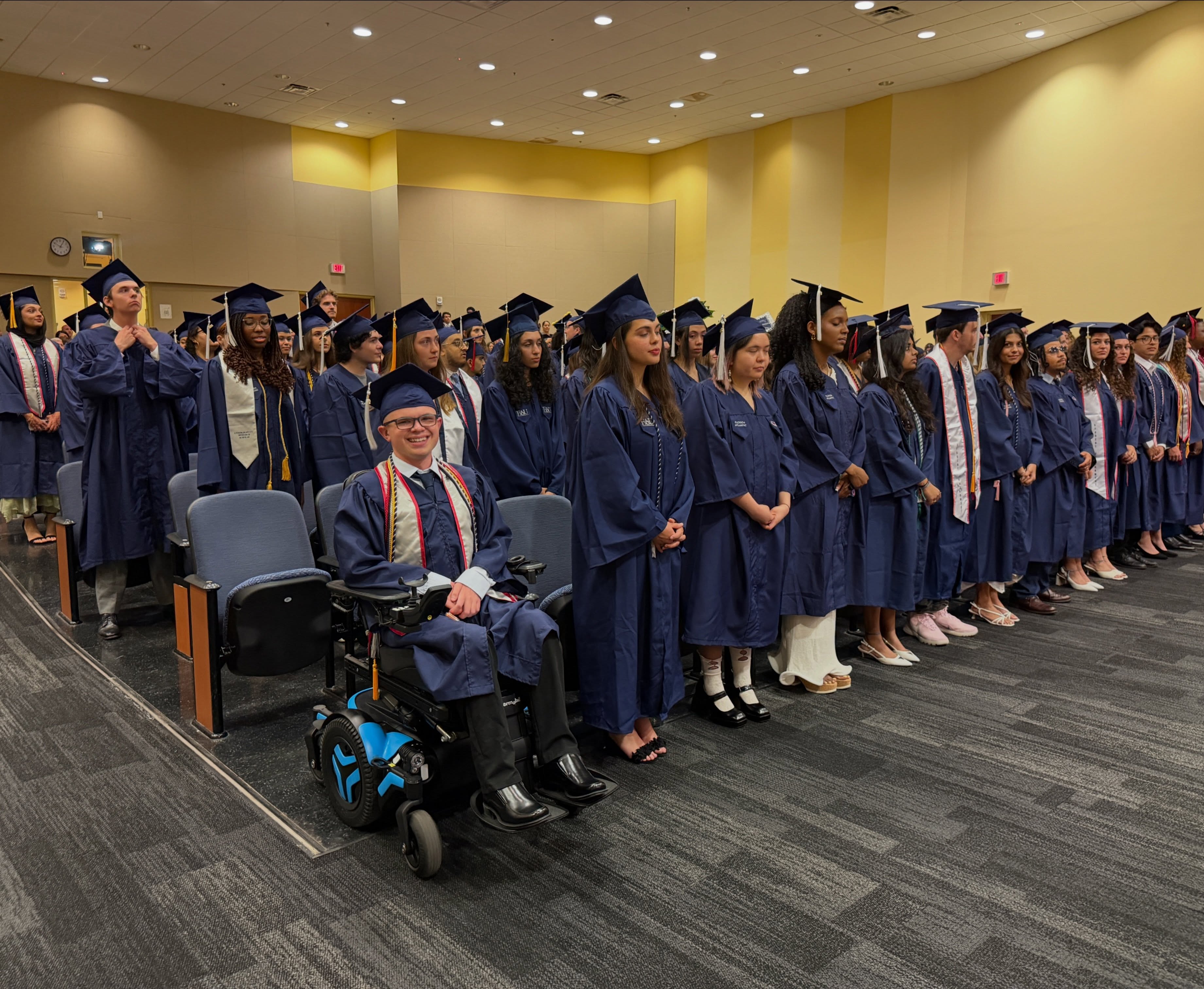
Because things did go sideways. Over those four years I lost the ability to walk and became a full-time wheelchair user. There was no single dramatic moment, just a slow narrowing of what my body would let me do, until one day the wheelchair was not a backup plan anymore, it was the plan. That is the kind of thing you cannot prepare for, and it quietly reorganizes everything else around it, your schedule, your buildings, your sense of how a day is going to go. By the time graduation came around, rolling into that hall in my power chair was just how I arrived anywhere, and lining up with my class to file in felt completely normal.
What I did with the years in between
The strange part is that the same stretch of time also held some of the best things I have ever done. I did RNA research at the UF Scripps Institute in the Disney Lab, which is the kind of work that makes you feel very small and very lucky at the same time. I studied abroad in France, which was equal parts beautiful and logistically absurd as a brand new wheelchair user trying to find a curb cut in a medieval town. I competed in National Model UN events in different cities around the country, which is where I learned how to argue a position I did not personally hold and somehow have fun doing it.
Then there was the thesis. I ended up writing my honors thesis on the undiagnosed neuromuscular disease that was, and still is, quietly taking my own body apart. Studying the mystery affecting your own muscles is a deeply odd thing to do, because you are both the researcher and the experiment. It was hard in ways that had nothing to do with the science, but it also handed me a strange amount of control over something that had felt completely out of my hands. That thesis went on to win the Outstanding Thesis Award, which meant a lot to me, not because of the plaque, but because it felt like proof that the worst thing that happened to me could still produce something worth keeping.
Up at the podium
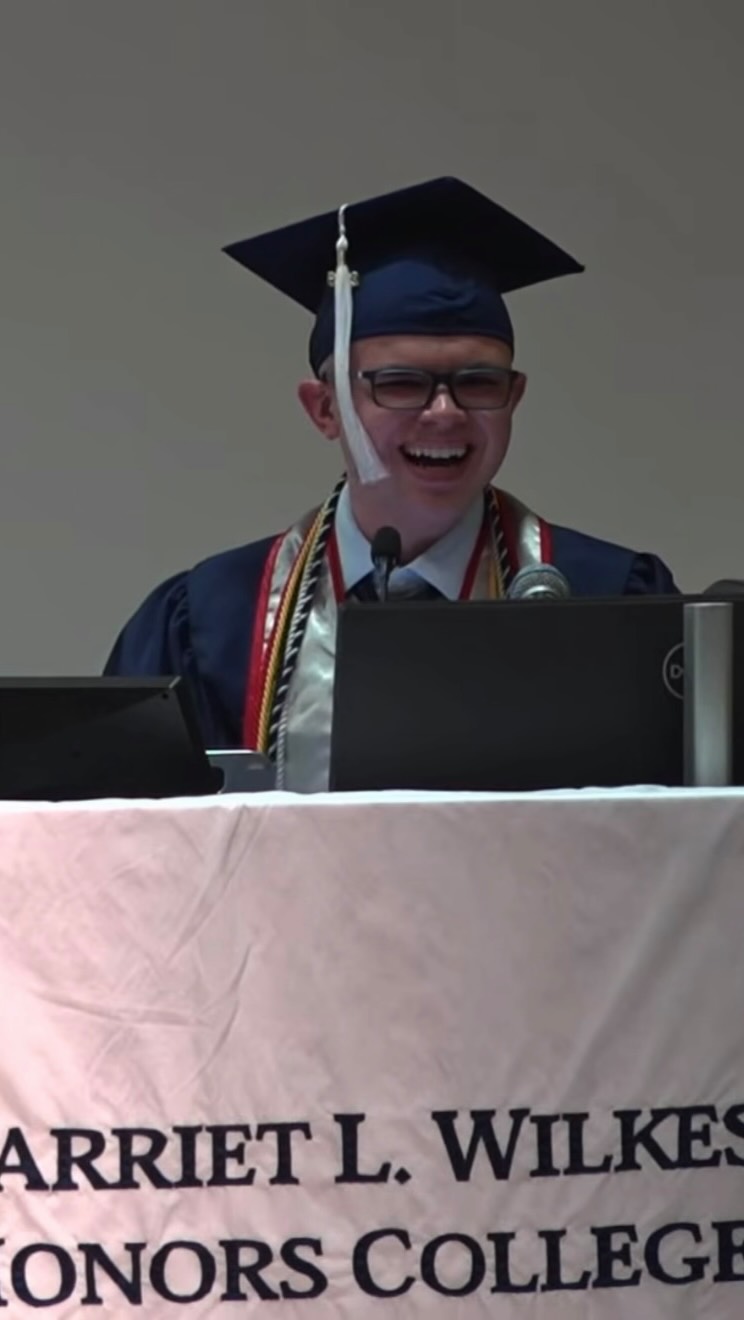
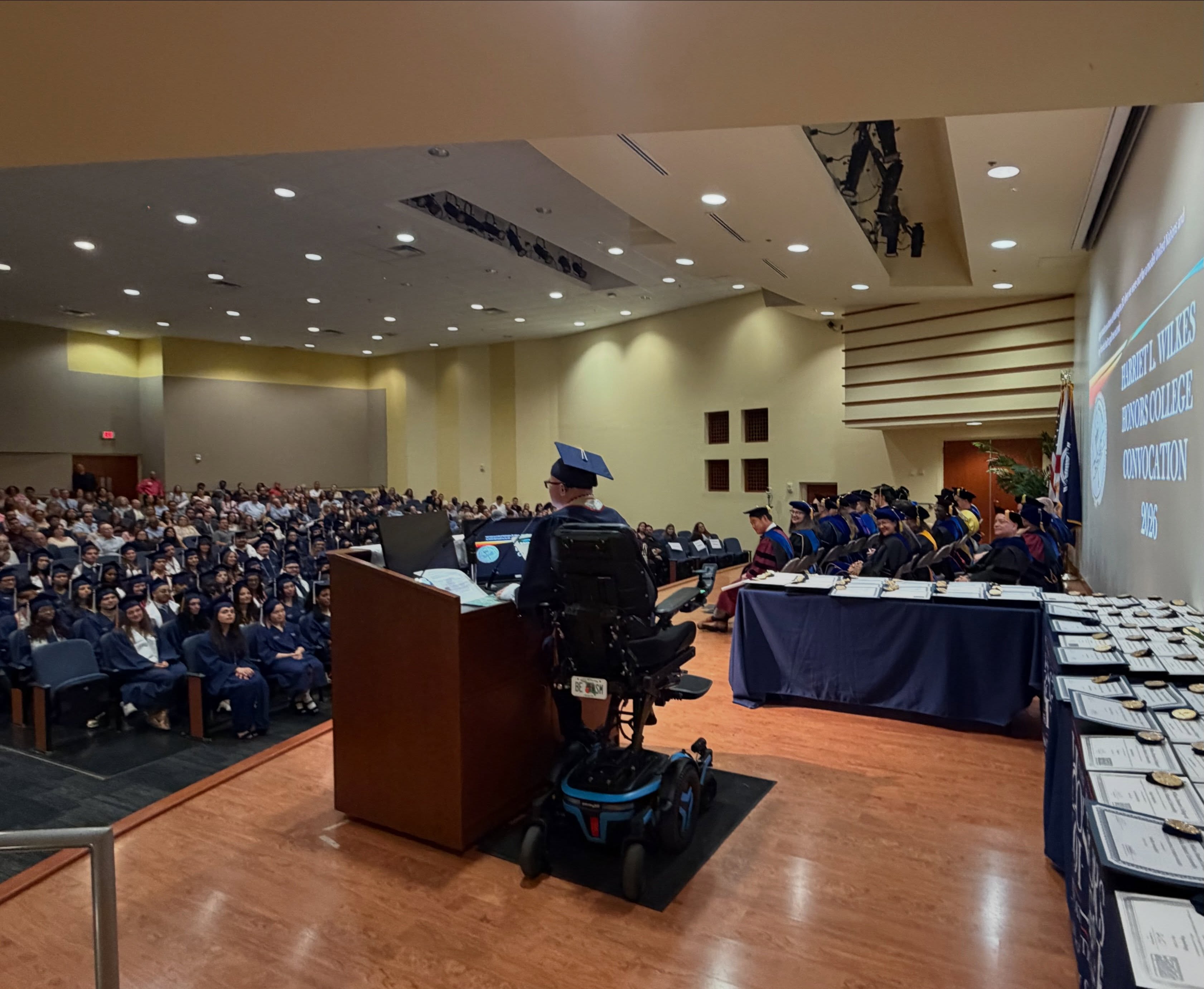
When it was my turn, I rolled up behind the podium with the Wilkes Honors College banner hanging right in front of me, two monitors with my notes on either side, and a room full of navy caps looking back. I had practiced enough that I was not really nervous, but there is a specific kind of vertigo in saying true things into a microphone while the people they are about are sitting ten feet away. Somewhere in the middle of it I cracked up at my own line, which I had not planned, and honestly that was my favorite part of the whole thing.
The thing the speech was actually about
A big part of the address was about perspective, and about making something out of the things you do not plan for. I tried hard not to do that in a cheesy, motivational-poster way, because I do not actually believe everything happens for a reason, and I think people can tell when you are selling them comfort you do not feel yourself. What I do believe is more modest. You rarely get to choose the material you are handed, but you usually get some say in what you build out of it. That is not the same as everything being fine. It just means the story is not over when the plan falls apart.
And the more I worked on the speech, the more I realized it was not really a story about me. Every single person in that room had taken some version of the same path, where the four years they imagined got rewritten by something they did not see coming. Different shapes, same shift. We all showed up with one idea and graduated as people that earlier version could not have predicted. Naming that out loud, in front of everyone, at the end of this chapter, felt like the most useful thing I could do with a few minutes at a podium.
The part I will actually remember
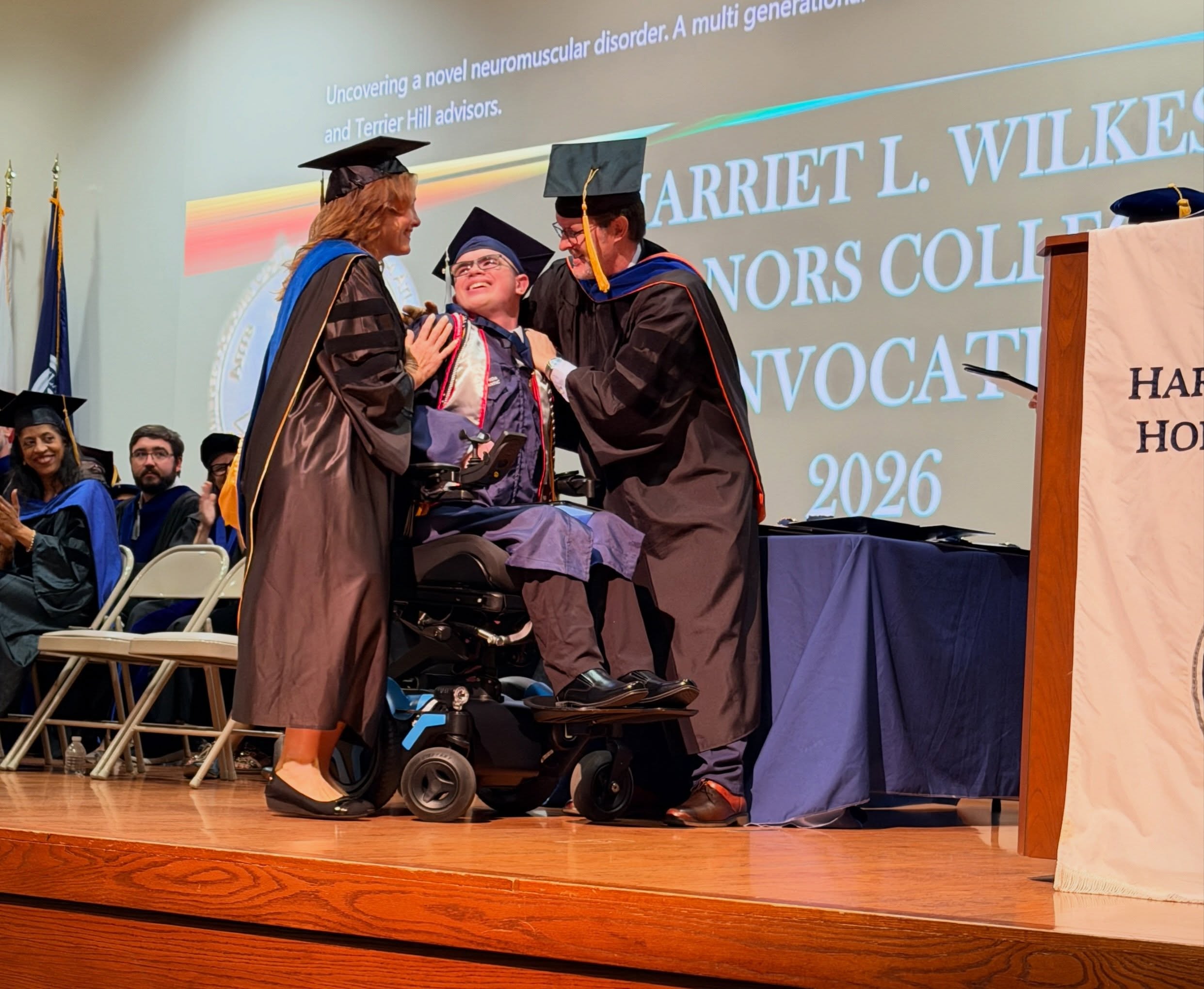
The speech is the reason there is a video, but the part I keep coming back to happened after I stopped talking. Two of my professors came over while the screen behind us still read 2026, and the three of us ended up laughing in the middle of the stage in a way that had nothing to do with anything formal. These are people who taught me, then read every draft of a thesis about my own disease, then trusted me with the last word at their ceremony. Getting to share the stage with them at the end was its own kind of award.
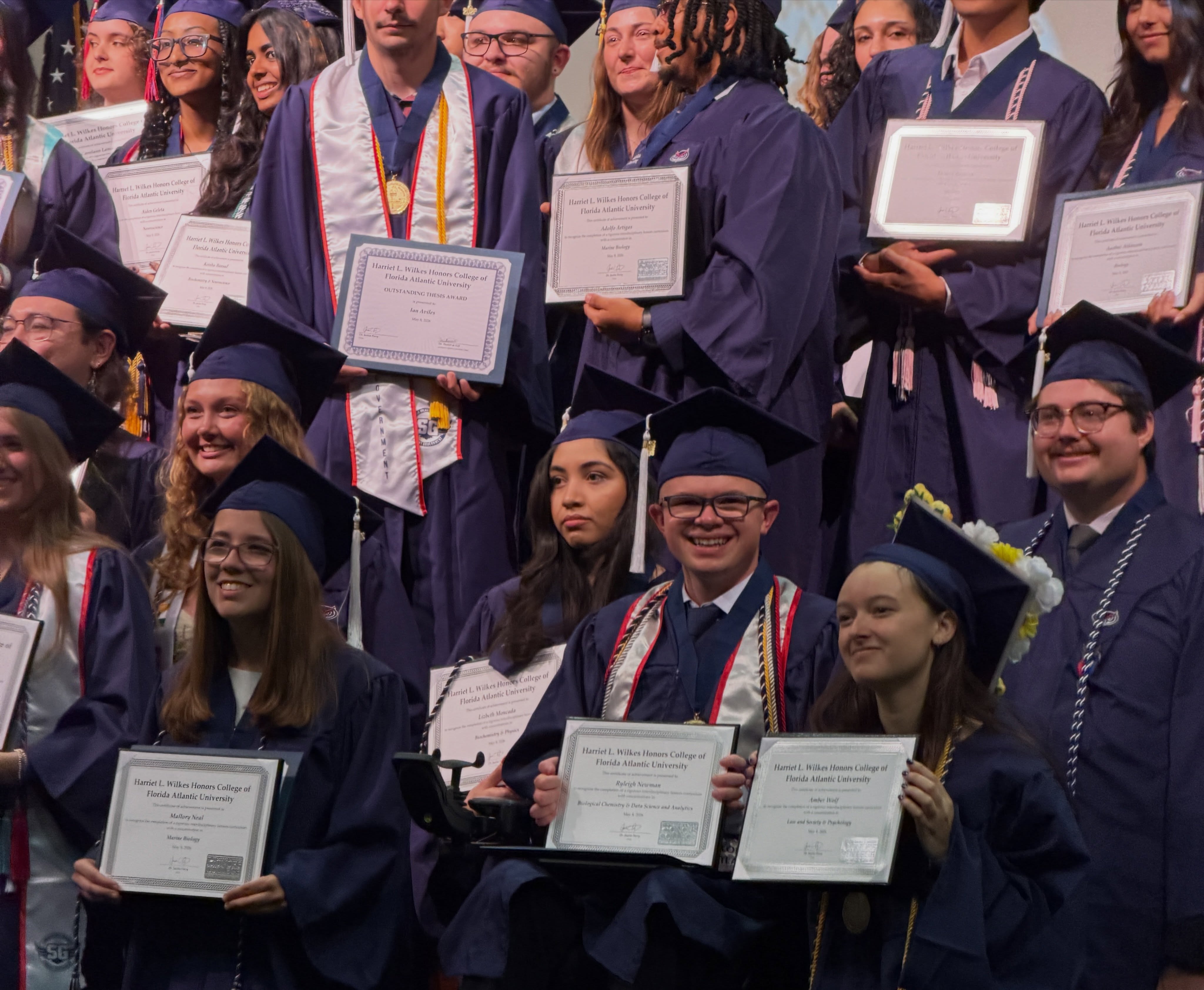
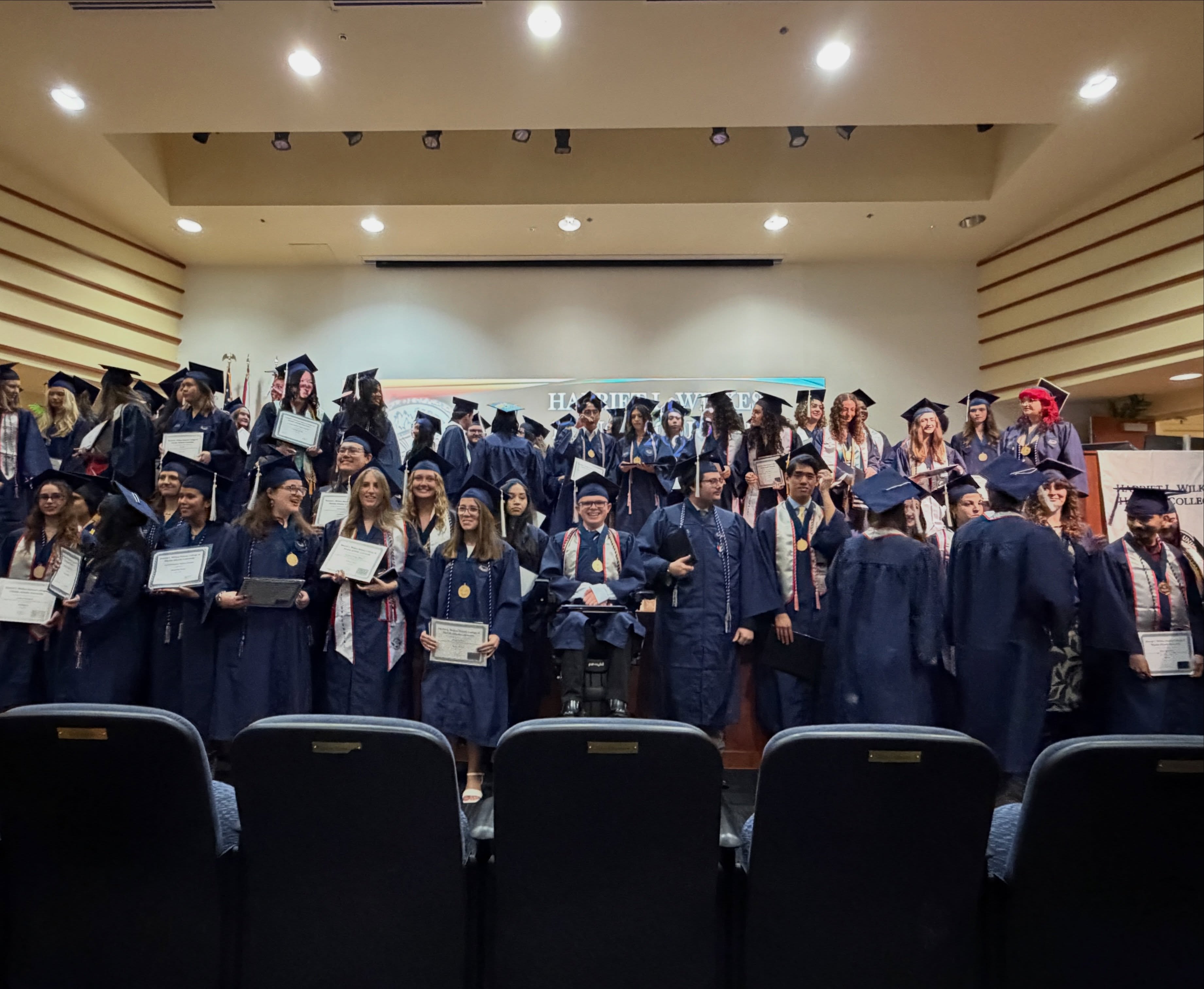
Mostly I just feel grateful. Grateful for the people who got me through the stretches I could not have done alone, for the faculty who taught me and then trusted me with this, and for a class of people I am genuinely proud of. If you watch the video above, that is what I was trying to get across the whole time. Congratulations, Class of 2026. I cannot wait to see what you build.
Written by Ryleigh Newman