The 15-Year Search for a Diagnosis
January 1, 2024 | Personal Experience
Most people carry a one word answer for whatever is going on with their body. They have asthma, or diabetes, or a bad knee, and that word does a lot of quiet work for them. It tells doctors where to start, tells insurance what to cover, and tells the person themselves what they are dealing with. I have spent more than fifteen years without that word. Since 2011 I have been living with a progressive neuromuscular disease that nobody has been able to name, and learning what it is like to live in the blank space where the diagnosis is supposed to go.
This is not the story of the science I eventually ran on my own genome, and it is not the story of the single morning my body decided I was done walking on my own. I wrote those down separately, in investigating my own DNA and in the day my legs gave out. This one is about the long middle stretch, the part that does not photograph well, where you live inside a question that refuses to resolve.
A Body That Kept Quietly Changing
It started in 2011, slowly enough that for a while it was easy to explain away. Things that used to be automatic, like balance, footing, the small adjustments your legs make a thousand times a day without asking, started to take effort and then started to fail. The early years were a long argument with my own body, where I kept insisting nothing was wrong and my body kept gently disagreeing. A neuromuscular disease does not announce itself. It edits you a little at a time, and by the time you notice the changes you realize they have been adding up for a while.
The frustrating part was not the symptoms themselves so much as the absence of an explanation for them. I could describe exactly what was happening, but no one could tell me why, and without a why there was no clear plan, no expected course, nothing to push back against. You cannot fight an opponent you cannot name.
The Surgery That Changed Everything
The real onset, the moment the slow leak turned into a flood, came in 2016 with a surgery that was supposed to help and instead made everything worse. It left me temporarily wheelchair bound, and it drew a hard line across my life between before and after. Up to that point the disease had been a background hum I could mostly ignore, and after that surgery it became the loudest thing in the room.
I do not say this to assign blame, because the people involved were trying to help, and hindsight makes everyone look reckless. But I would be lying if I pretended that operation did not redraw the map of my life. It is a strange thing to carry, knowing that a single decision accelerated a condition no one could even define, and that the thing that hurt me was supposed to be the thing that helped. That is the kind of contradiction you do not really resolve. You just learn to hold it.
A Disease That Looks Like Something It Is Not
For years the working theory was Charcot-Marie-Tooth disease, a hereditary peripheral neuropathy that damages the nerves running out to the arms and legs. On the surface my case fit. The pattern of weakness, the way it crept outward, the slow march of it all looked enough like Charcot-Marie-Tooth that it became the placeholder name everyone reached for. A placeholder is comforting. It gives you something to type into a search bar and a community of people to compare notes with.
The problem is that it never actually held up. Test after test, year after year, the results kept coming back not quite right, close enough to keep Charcot-Marie-Tooth on the whiteboard but never enough to write it down in permanent ink. My disease resembles it the way a cover band resembles the original. You recognize the song, but something in the arrangement is off. After more than fifteen years of testing, it still has no name, and it is still progressing, which is its own quiet kind of pressure. The thing keeps moving while the label stays blank.
Living Inside a Medical Mystery
People assume the hardest part of an undiagnosed illness is the physical decline, and the decline is real, but the part that wears on you is the uncertainty. A diagnosis is not just a name. It is a story with a shape, a beginning and a likely middle and a range of endings you can at least prepare for. Without one, every appointment starts from scratch. You become the expert on your own case by default, the person in the room who has read the most and lived all of it, explaining your own history to specialists who are meeting it for the first time.
There is also a strange social weight to being undiagnosed. When you tell someone you have a specific condition, they nod and move on. When you tell them you have something nobody can identify, you watch them reach for a response and come up empty, and then you end up reassuring them, which is its own small absurd chore. I have gotten good at the short version. It is a progressive neuromuscular disease, it acts a lot like Charcot-Marie-Tooth, and no, they have not figured out exactly what it is yet. Delivered with a shrug, it usually does the trick.
I am far from alone in this. There is an entire field built around people like me, including the Undiagnosed Diseases Network, which exists specifically for the cases that fall through every other crack, and organizations like the National Organization for Rare Disorders, which advocate for the millions of people whose conditions are too uncommon to be anyone's priority. Knowing those exist does not give me an answer, but it does remind me that being a medical mystery is not the same as being a medical impossibility. Somewhere, the answer exists. It just has not reached me yet.
Where the Search Led Me
There is a version of this story where the uncertainty just grinds you down, and for a while it tried. But somewhere along the way the lack of an answer stopped feeling only like a wall and started feeling like a question I might be able to take a swing at myself. If the testing kept landing near Charcot-Marie-Tooth without ever sticking, then maybe the answer was hiding somewhere in the parts of my genome nobody had looked at closely enough. Maybe I could go looking.
That instinct is what eventually pushed me into bioinformatics and into reading my own genetic code for my thesis, which I wrote about over in investigating my own DNA. I will not relitigate the science here, except to say that the whole project grew directly out of this fifteen year blank. The mystery is the reason I learned to do any of it. A diagnosis would have been a relief, but the absence of one turned out to be a strange kind of engine.
Still Looking, Still Moving
I would love to end this with the name of my disease, the satisfying click of a mystery solving on the last page. I do not have that yet. What I have instead is more useful than I expected when I started. I have a body I understand better than any chart does, a set of skills I only learned because the answer was missing, and a stubborn refusal to treat undiagnosed as the same thing as undefeated. The disease is still progressing, the search is still open, and I am still the one doing most of the looking.
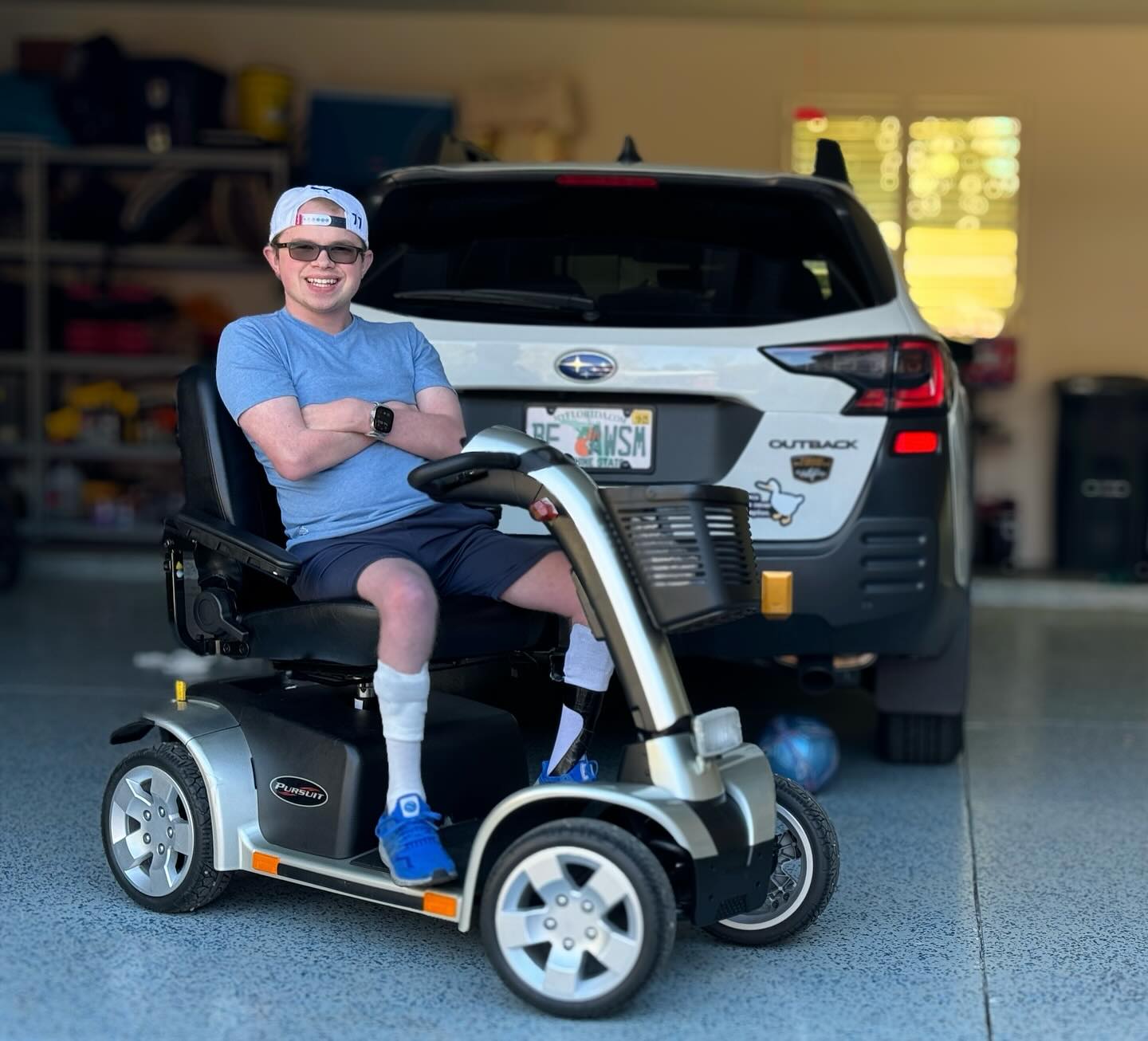
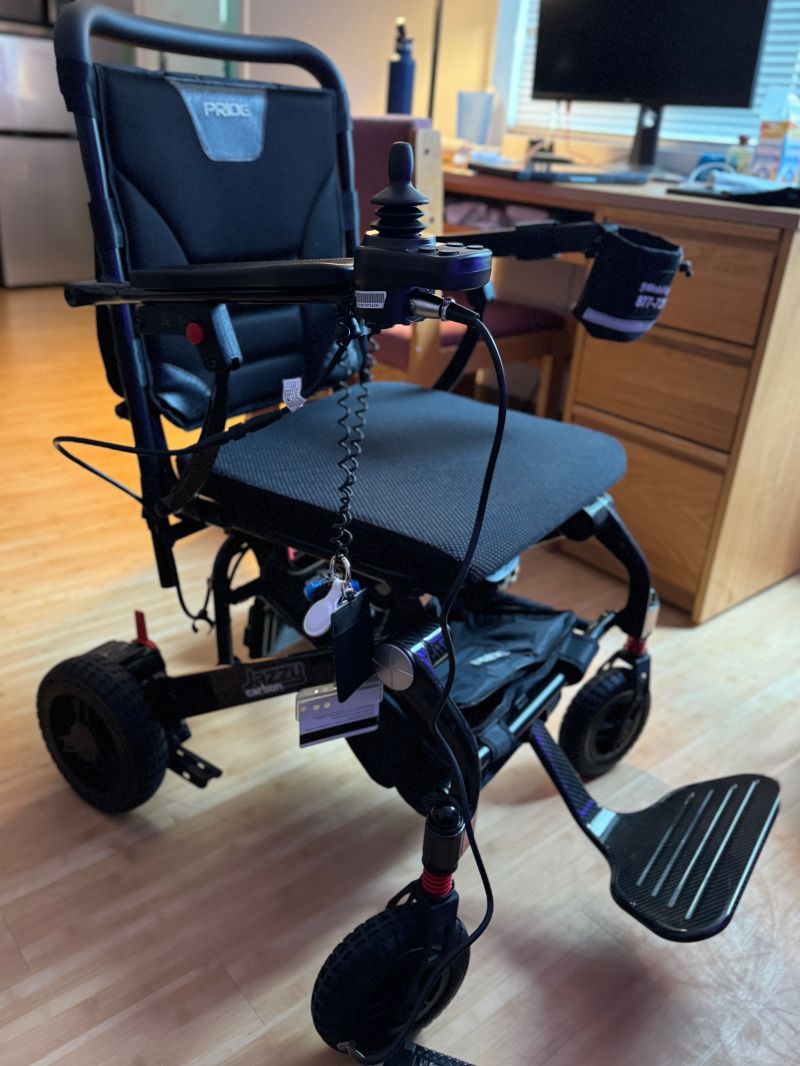
Fifteen years in, the blank space where my diagnosis should be is just part of who I am, and I have made a strange sort of peace with carrying a question instead of an answer. The wheels under me are not a defeat. They are just how I keep showing up to look for the next clue. When I do finally get a name for this thing, I will have earned every letter of it.
Written by Ryleigh Newman